

The Benefits of Red, Near-Infrared, and Far-Infrared Light in Sauna Therapy
2026 Feb 24th
Red, near-infrared, and far-infrared wavelengths have been studied for decades. Many people report calming effects on the body
Summary
Combining red, near-infrared, and far-infrared light can create a layered at-home routine. Red and near-infrared light are studied in photobiomodulation for their potential to support cellular function and recovery, while far-infrared sauna-style heat supports relaxation and a calming routine.
1. Understanding the Spectrum
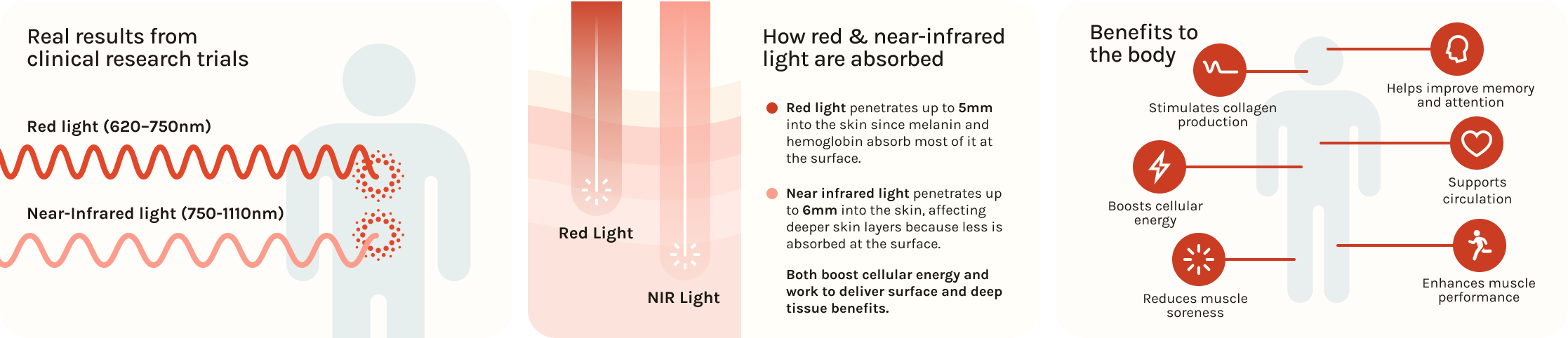
Light interacts with the body in different ways depending on wavelength and depth of penetration, which is why red/NIR effects are typically discussed in cellular terms while FIR is discussed in thermal terms.
|
Light Type |
Wavelength Range |
Depth of Penetration |
Key Effects |
|
Red Light (Visible) |
620–700 nm |
Skin surface |
Supports collagen and skin vitality |
|
Near-Infrared (NIR) |
700–1400 nm |
2–5 mm |
Boosts cellular energy and recovery |
|
Far-Infrared (FIR) |
5000–10000 nm |
Up to 1.5 inches |
Reported to warm the body from the inside out |
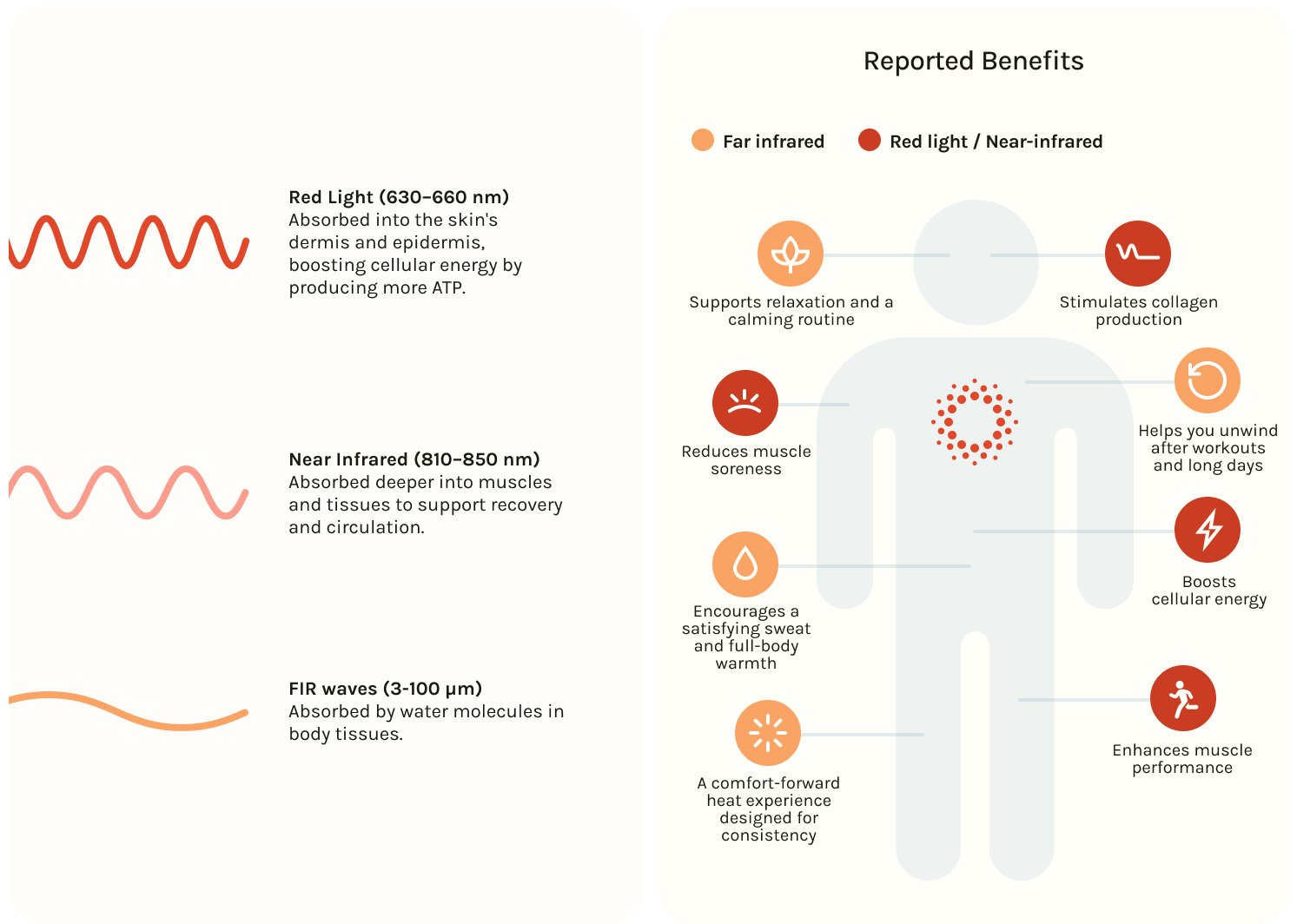
Red and near-infrared light primarily act on the skin and cells, while far-infrared provides deeper thermal effects. Together, they encourage the body’s natural ability to restore equilibrium.
2. How Red and Near-Infrared Light Support Cellular Health
Red and near-infrared wavelengths are studied for their interaction with mitochondria, supporting ATP-related cellular energy processes that may influence how the body recovers and adapts.
In performance and recovery contexts, photobiomodulation research suggests these wavelengths may support muscle recovery and functional outcomes following exertion.
For skin wellness, multiple clinical studies have evaluated red/NIR light for measures related to skin texture, appearance, and collagen-associated outcomes.
3. The Deep Thermal Benefits of Far-Infrared
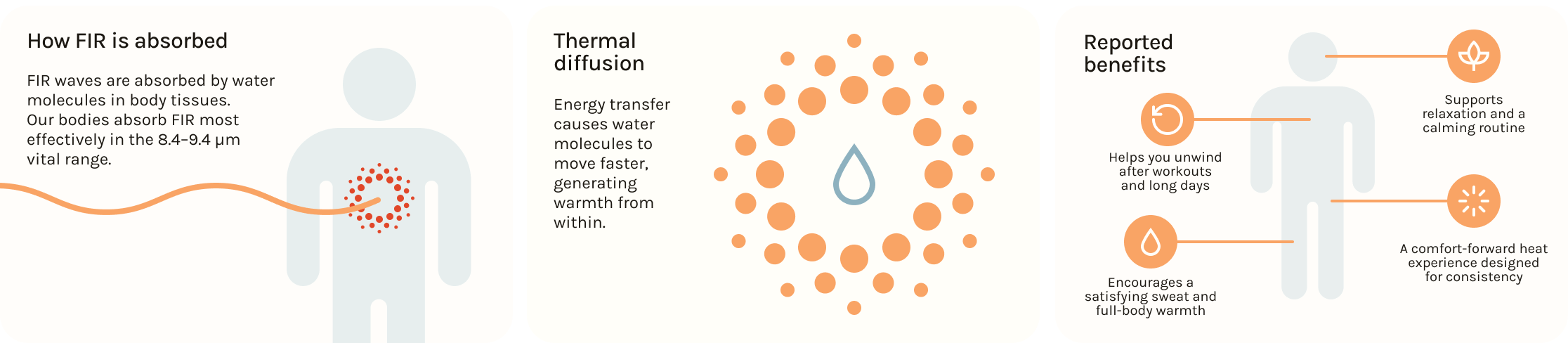
Far-infrared heat works differently than high-heat traditional sauna air heating: rather than relying primarily on hot ambient air, FIR is often described as warming the body through deeper from the inside out.
It’s reported to have the following benefits:
- Supports relaxation and a calming routine
- Encourages a satisfying sweat and full-body warmth
- Helps you unwind after workouts and long days
- A comfort-forward heat experience designed for consistency
4. Why the Combination Matters
Each wavelength has a distinct mechanism, but they can complement one another as part of a consistent routine: red/NIR supporting cellular-level recovery processes, and FIR supporting relaxation and calming effects.
Research across photobiomodulation modalities suggests benefits can be influenced by consistency and dosing parameters (including wavelength, intensity, and timing), which is why a balanced approach typically outperforms intensity alone.
 5. Safer and Mindful Use
Across sauna and infrared research, sessions are generally well tolerated when used appropriately, though individual considerations apply and people with underlying conditions should consult a clinician.
To support an optimal experience:
- Stay hydrated before and after sessions
- Begin with shorter durations (10–20 minutes) and increase gradually
- Allow your body to cool naturally afterward
- Consult a healthcare professional if you have medical implants or underlying conditions
Consistency tends to matter more than intensity, especially when building a long-term wellness practice.
In Summary
Red, near-infrared, and far-infrared light each play a unique role in supporting the body. Used together, they offer a balanced combination of relaxation and a calming routine, encouraging a satisfying sweat and full-body warmth.
FAQs
- Is red light therapy the same as infrared?
No. Red light is visible and primarily affects the skin, while infrared light is invisible and penetrates deeper to heat the body. - Can near-infrared and far-infrared be used together?
Yes. Combining both supports supports a balanced routine.